
Syzygium cumini (Myrtaceae) Jamun, Black plum
Updated: Jun 5
Syzygium cumini (Java Plum, Jamun, Jambhul)
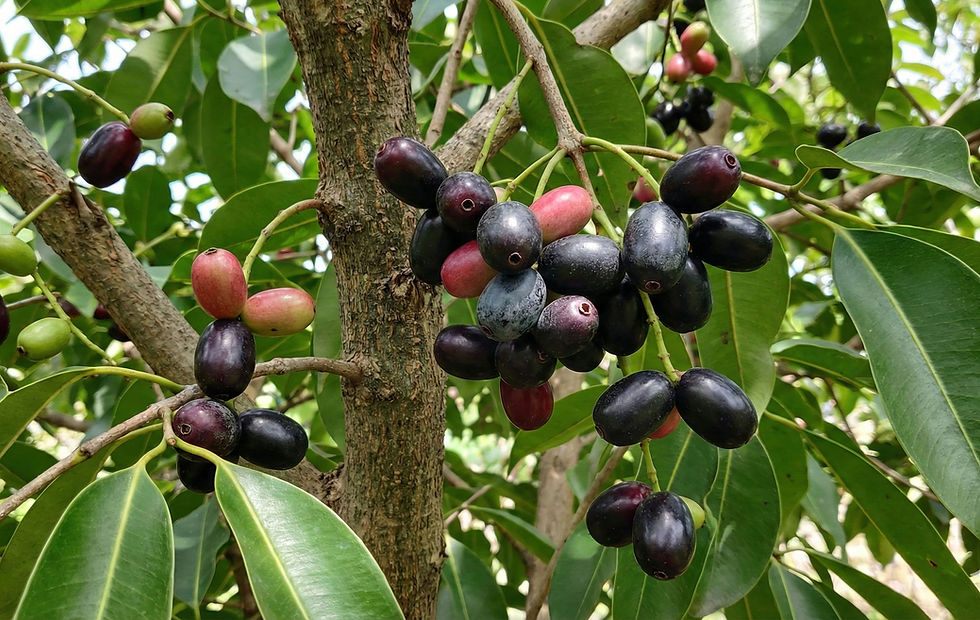
Syzygium cumini, known globally as Jamun or Black Plum, is one of the most scientifically validated medicinal plants for metabolic disorders. It is most notably recognized as a potent antihyperglycemic and antidiabetic agent, with virtually every part of the tree seeds, fruits, leaves, and bark demonstrating blood sugar regulating properties. Modern research has confirmed its ability to inhibit key carbohydrate-digesting enzymes, enhance insulin sensitivity, and protect pancreatic tissue. Beyond diabetes, it exhibits significant antioxidant, anti-inflammatory, antimicrobial, and emerging anticancer activities, with recent 2025-2026 studies revealing its potential against non-small cell lung cancer through multi-target mechanisms.
---
1. Taxonomic Insights
Species: Syzygium cumini (L.) Skeels
Family: Myrtaceae
The Myrtaceae family comprises aromatic trees and shrubs characterized by opposite, entire leaves containing translucent oil glands. The genus Syzygium is one of the largest in Myrtaceae, encompassing economically and medicinally important species. Syzygium cumini was first described by Carl Linnaeus and later reclassified from Eugenia to the genus Syzygium.
Taxonomic Note: The plant is widely known by its synonyms Eugenia cumini (L.) Druce and Eugenia jambolana Lam. The name Jamun is used throughout the Indian subcontinent, and historical records indicate that Ibn Batuta, who visited India in 1332 A.D., described Jamun as one of the fruits of Delhi. At the turn of the 20th century, before the discovery of insulin, S. cumini was one of the most commonly marketed and recommended antidiabetic plants in Europe.
Related Herbs from the Same Family:
· Syzygium aromaticum (Clove): A well-known spice with potent analgesic, antimicrobial, and antioxidant properties due to its high eugenol content.
· Syzygium jambos (Rose Apple): Used traditionally for its antidiabetic, anti-inflammatory, and diuretic effects.
· Syzygium polyanthum (Indonesian Bay Leaf): Employed in Southeast Asian cuisine and traditional medicine for its antidiabetic and antihypertensive properties.
· Eucalyptus globulus (Eucalyptus): A medicinal tree used for respiratory conditions, cough, and as an antiseptic and decongestant.
---
2. Common Names
Scientific Name: Syzygium cumini (L.) Skeels | English: Black Plum, Java Plum, Malabar Plum, Jambolan | Sanskrit: जम्बु (Jambu), महाफला (Mahaphala), काकफला (Kakaphala), राजजम्बु (Rajajambu) | Hindi: जामुन (Jamun), काला जामुन (Kala Jamun) | Bengali: জাম (Jam) | Tamil: நாவல் (Naval), நாகப்பழம் (Nagapazham) | Telugu: నేరేడు (Neredu), నేరేడు పండు (Neredu Pandu) | Kannada: ನೇರಳೆ (Nerale), ನೇರಳಿ (Nerali) | Malayalam: ഞാവൽ (Njaval), കാട്ടുഞാവൽ (Kattunjaval), ഞാറ (Njara) | Marathi: जांभूळ (Jambhul) | Gujarati: જાંબુ (Jambu) | Punjabi: ਜਾਮਣ (Jaman) | Oriya: ଜାମୁ (Jamu) | Assamese: জামুক (Jamuk) | Nepali: जामुन (Jamun) | Portuguese: Jambolão | French: Jamelonier | Spanish: Jambolana | Brazilian Portuguese: Azeitona Preta | Indonesian: Jamblang, Duwet | Malay: Jambu Langsat | Thai: หว้า (Wa) | Chinese: 乌墨 (Wu mo), 海南蒲桃 (Hai nan pu tao) |
---
3. Medicinal Uses
Primary Actions: Antihyperglycemic, Antidiabetic, Antioxidant, Anti-inflammatory, Hypolipidemic, Antidiarrheal, Antimicrobial, Immunomodulatory.
Secondary Actions: Anticancer, Cardioprotective, Hepatoprotective, Nephroprotective, Antipyretic, Analgesic, Anthelmintic, Astringent, Diuretic, Antifungal, Antiviral.
Medicinal Parts:
Virtually every part of the Jamun tree is used medicinally, with specific therapeutic indications for each.
· Seeds: The most potent part for diabetes management. Rich in jambosine, triterpenoids, and anthocyanins. Used as a powder, extract, or decoction.
· Fruit Pulp: Astringent, stomachic, diuretic, and digestive. Used for oliguria, chronic diarrhea, and splenomegaly. The fresh juice or syrup is traditionally consumed.
· Bark: Astringent, anthelmintic, and antibacterial. Used alone or in combination for astringent decoctions, gargles, washes, and in treating diabetes, leucorrhea, fever, skin diseases, and strangury.
· Leaves: Antibacterial, anti-inflammatory, and wound healing. Tender leaves are used for vomiting and dysentery. Leaf paste is applied to indolent sores and ulcers.
· Kernel (Seed without coat): In Unani medicine, used to strengthen the stomach and liver, and treat bloody and bilious diarrhea.
---
4. Phytochemicals Specific to the Plant and Their Action
Major Bioactive Compounds Identified:
· Jambosine (Alkaloid): A signature alkaloid found in the seeds, specifically recognized for its Antihyperglycemic activity. It is believed to inhibit the conversion of starch to sugar, contributing to blood glucose regulation.
· Anthocyanins (Delphinidin-3,5-O-diglucoside, Petunidin-3,5-O-diglucoside, Malvidin-3,5-O-diglucoside, Cyanidin): These are responsible for the deep purple-black color of the fruit and exhibit potent Antioxidant, Anti-inflammatory, and Antidiabetic properties. They scavenge free radicals and protect pancreatic beta cells from oxidative damage.
· Triterpenoids (Ursolic acid, Oleanolic acid, Betulinic acid, Friedelin): These compounds are potent α-Amylase and α-Glucosidase inhibitors (IC50 in the low microgram per mL range), delaying carbohydrate digestion and reducing postprandial blood glucose spikes. Betulinic acid also induces apoptosis in cancer cells via mitochondrial activation. Friedelin contributes to anti-inflammatory effects.
· Flavonoids (Quercetin, Kaempferol, Myricetin, Catechin): These provide Antioxidant, Anti-inflammatory, Antimicrobial, and Cardioprotective effects. Quercetin and kaempferol are well-documented for their ability to reduce inflammation and oxidative stress.
· Phenolic Acids (Gallic acid, Ellagic acid, Caffeic acid, Chlorogenic acid): Gallic and ellagic acid are particularly abundant in the bark and are responsible for its astringent, Antioxidant, Antiproliferative, and Antiglycation properties. A ready-to-serve herbal drink prepared with aqueous bark decoction used in Ayurveda for diabetes patients contains these compounds.
· Tannins: Present in significant amounts in the bark and seeds, providing Astringent, Antidiarrheal, Antimicrobial, and Wound healing properties.
· Sterols (β-sitosterol): Contributes to Hypolipidemic and Anti-inflammatory effects.
· Essential Oils (α-pinene, β-pinene, limonene): Present in leaves, contributing to Antimicrobial and Antioxidant activities.
· Hydroxy Citric Acid (HCA): Identified in recent 2025 studies via HPTLC, contributing to Glucose uptake enhancement and Anti-inflammatory effects.
---
5. Traditional and Ethnobotanical Uses Covering the Medicinal Uses
Madhumeha (Diabetes Mellitus) & Prameha (Metabolic Disorders)
Formulation: Seed powder (Jamun Guthli); bark decoction; leaf tea.
Preparation & Use: Dried seed powder is taken with water or yogurt before meals. A decoction of the bark is consumed daily. In Brazilian folk medicine, diabetics use teas prepared from leaves and seeds. This use has persisted for centuries before the discovery of insulin. A ready-to-serve herbal drink prepared with the aqueous bark decoction is used in Ayurveda for diabetes patients.
Reasoning: Modern research provides robust validation. The seeds contain jambosine which inhibits starch-to-sugar conversion. The leaves contain ursolic and oleanolic acid which inhibit α-amylase and α-glucosidase enzymes. A 2025 study on pomace extract showed an IC50 of 85.68 ± 5.22 μg/mL against α-amylase, comparable to acarbose (64.28 ± 7.15 μg/mL). The extract enhanced glucose uptake in 3T3-L1 adipocyte cells, with peak efficacy at 20 μg/ml. The seeds also protect pancreatic tissue from oxidative damage.
Atisara (Diarrhea) & Pravahika (Dysentery)
Formulation: Bark decoction; leaf juice; ripe fruit juice.
Preparation & Use: The expressed juice of leaves and fresh bark juice is used with goat's milk in cases of dysentery. The leaf juices are taken internally to treat dysentery. Fruit juice is taken internally to treat chronic diarrhea and enlargement of the spleen. In Unani medicine, the kernel is used to treat bloody and bilious diarrhea.
Reasoning: The astringent tannins in the bark and leaves bind to the intestinal mucosa, reducing inflammation and fluid secretion. Antimicrobial compounds combat the bacterial pathogens responsible for dysentery. The bark is used alone or in combination with other drugs to prepare astringent decoctions, gargles, and washes.
Vrana (Wounds) & Tvak Rogas (Skin Diseases)
Formulation: Leaf paste; bark powder.
Preparation & Use: A paste of leaves is used to promote healthy discharges from indolent sores and ulcers. Bark is used in skin diseases. Tender leaves are also used in vomiting.
Reasoning: The antimicrobial and anti-inflammatory properties of flavonoids, tannins, and terpenoids prevent infection and reduce swelling. The astringent action promotes wound contraction. In the Philippines, it is used in folk medicine against leishmaniasis.
Jwara (Fever) & Shotha (Inflammation)
Formulation: Bark decoction; fruit juice.
Preparation & Use: Bark is used for the treatment of fever and burning sensation.
Reasoning: Ursolic acid, oleanolic acid, and other triterpenoids exhibit antipyretic and anti-inflammatory effects. The presence of flavonoids further contributes to reducing inflammatory mediators.
Krimiroga (Helminthiasis/Worm Infestation)
Formulation: Bark powder; seed powder.
Preparation & Use: The bark is considered anthelmintic.
Reasoning: Tannins and other phytochemicals exhibit vermifugal properties, helping expel intestinal parasites.
---
6. Healing Recipes, Decoctions, and Preparations
Antidiabetic Seed Powder (Traditional)
Purpose: To help manage blood sugar levels.
Preparation & Use:
1. Collect Jamun seeds, remove the outer coat, and dry them thoroughly in shade.
2. Grind to a fine powder.
3. Take 1-2 grams of this powder with water or yogurt before meals, twice daily. Use under professional supervision alongside conventional diabetes care.
Antidiarrheal Bark Decoction
Purpose: For acute diarrhea and dysentery.
Preparation & Use:
1. Take 10-15 grams of dried Jamun bark.
2. Simmer in 500 ml of water for 20-30 minutes until reduced to 250 ml.
3. Strain, cool, and drink 50-100 ml twice daily until symptoms subside.
Wound Healing Leaf Paste
Purpose: Topical application for ulcers, sores, and skin infections.
Preparation & Use:
1. Crush a handful of fresh Jamun leaves into a smooth paste.
2. Apply to the affected area, cover with a clean cloth, and leave for 1-2 hours.
3. Repeat daily.
Glycemic Control Decoction (Ayurvedic Herbal Drink)
Purpose: Supportive therapy for diabetes management.
Preparation & Use:
1. Prepare a decoction using Jamun bark as described above.
2. This ready-to-serve drink contains gallic and ellagic acids with antioxidant, antiproliferative, and antiglycation properties.
3. Consume as directed by a qualified practitioner.
---
7. In-Depth Phytochemical Profile and Clinical Significance of Syzygium cumini (Jamun)
Introduction
Syzygium cumini, the Indian Black Plum, stands as a testament to the power of botanicals in the management of chronic metabolic disease. Long before the advent of modern pharmaceuticals, Jamun was so renowned for its ability to curb diabetes that it was one of the most heavily marketed antidiabetic plants in Europe at the turn of the 20th century. Today, rigorous modern science has not only validated this ancient wisdom but has also elucidated the sophisticated molecular mechanisms behind its efficacy. The 2025 and 2026 research landscape has been particularly transformative, revealing the potent α-amylase inhibitory activity of Jamun pomace extract with IC50 values rivaling the drug acarbose. Concurrent in silico studies have mapped the plant's multi-target, multi-pathway strategy against non-small cell lung cancer, identifying specific compounds that bind to core cancer targets. With its rich arsenal of jambosine alkaloids, anthocyanins, triterpenoids, and phenolic acids, Syzygium cumini has transitioned from a traditional food and medicine to a rigorously studied source of therapeutic leads for diabetes, inflammation, cancer, and microbial infections.
1. Antidiabetic Mechanisms: A Multi-Targeted Approach
Jamun is not a single-action drug; it addresses diabetes through a sophisticated network of complementary mechanisms.
Key Compounds: Jambosine (alkaloid), Ursolic acid, Oleanolic acid, Betulinic acid, Anthocyanins, Gallic acid, Ellagic acid.
Actions and Clinical Relevance:
· α-Amylase and α-Glucosidase Inhibition (Cutting-Edge 2025 Validation): This is one of the most clinically significant mechanisms. By inhibiting these key carbohydrate-digesting enzymes, Jamun delays the breakdown of starches and sugars, flattening postprandial (after-meal) blood glucose spikes. A landmark 2025 study on Jamun pomace (the byproduct of juice extraction) demonstrated an α-amylase inhibitory IC50 of 85.68 ± 5.22 μg/mL, remarkably close to the pharmaceutical drug acarbose (64.28 ± 7.15 μg/mL). Molecular docking confirmed that the volatile compound R11 exhibited a high binding score of -8.0 kcal/mol to α-amylase, similar to acarbose's -8.2 kcal/mol. Ursolic acid from leaves showed potent inhibition in the low microgram per mL range against both α-amylase and α-glucosidase.
· Enhancement of Glucose Uptake (Insulin Sensitization): A 2025 study on ethanolic extracts of S. cumini demonstrated enhanced glucose absorption in 3T3-L1 adipocyte cells, with peak effectiveness at 20 µg/ml. This indicates insulin-sensitizing properties, helping the body's cells utilize glucose more effectively from the bloodstream.
· Pancreatic Beta Cell Protection (Antioxidant Mechanism): The anthocyanins and phenolic acids are potent free radical scavengers. They protect the delicate insulin-producing beta cells of the pancreas from oxidative damage, preserving the body's own capacity to produce insulin. In vivo experiments show that Jamun seed powder restores antioxidant enzyme activities (superoxide dismutase and catalase) while reducing lipid peroxidation markers.
· Metabolic Syndrome Management: Dietary supplementation with Jamun seed powder in high-carbohydrate, high-fat diet-induced obese rats prevented body weight gain, improved glucose tolerance, corrected dyslipidaemia, and reduced fasting blood glucose and serum insulin levels. Histological analyses confirmed reduced inflammatory infiltration and fibrosis in hepatic tissues.
2. Anticancer Activity: Emerging Breakthroughs (2025-2026)
Key Compounds: Betulinic acid, Ellagic acid, Quercetin, Kaempferol, Myricetin.
Actions and Clinical Relevance:
· Non-Small Cell Lung Cancer (In Silico 2026 Study): A groundbreaking 2026 study published in the Karbala International Journal of Modern Science employed in silico approaches to investigate S. cumini against NSCLC. The study revealed that S. cumini contains 115 compounds, with 14 predicted to have anticancer activity. Network pharmacology identified 617 target genes related to NSCLC, with 11 core target genes including PIK3CA, CDK4, and SRC. The study concluded that S. cumini can treat NSCLC via multi-target, multi-pathway strategies.
· Bark-Derived Anticancer Activity (2026 Review): A 2026 review on S. cumini bark highlighted that betulinic acid induces apoptosis via mitochondrial activation, while ellagic acid suppresses the NF-κB pathway. These are critical pathways in cancer cell survival and proliferation. The review confirmed the strong potential of S. cumini bark as a source of phytopharmaceutical candidates for anticancer development.
· Apoptosis Induction: Triterpenoids and ellagic acid work together to trigger programmed cell death in malignant cells while sparing healthy tissues.
3. Antimicrobial Activity: Broad-Spectrum Efficacy
Key Compounds: Quercetin, Kaempferol, Myricetin, Ellagic acid, Gallic acid, Tannins.
Actions and Clinical Relevance:
· Antibacterial Efficacy (2026 Confirmation): A 2026 review on the antimicrobial potential of S. cumini bark found that the n-hexane fraction effectively inhibits Salmonella typhi. The mechanism is believed to involve cell wall disruption by flavonoids and tannins. The bark also shows activity against other bacterial pathogens.
· Antifungal and Antiviral: The same compounds contribute to antifungal effects against various dermatophytes and potential antiviral activity, supporting traditional use in ringworm.
4. Anti-inflammatory and Antioxidant Activity
Key Compounds: Anthocyanins, Flavonoids, Triterpenoids, Phenolic acids.
Actions and Clinical Relevance:
· Inflammatory Marker Reduction: A 2025 study investigating anti-inflammatory actions in a diabetes-induced model demonstrated that S. cumini extract effectively reduces levels of key inflammatory markers such as TNF-alpha and IL-6.
· Comprehensive Free Radical Scavenging: The deep purple anthocyanins are among nature's most powerful antioxidants. They, along with gallic and ellagic acid, neutralize free radicals implicated in aging, cardiovascular disease, and neurodegeneration. The antioxidant activity of the pulp is particularly high, followed by seeds, bark, and leaves.
5. Additional Pharmacological Activities
Gastroprotective: The astringent tannins provide antidiarrheal effects, validated by traditional use for dysentery and chronic diarrhea.
Cardioprotective: The hypolipidemic effects (reducing LDL and total cholesterol) and antioxidant properties support cardiovascular health.
Diuretic and Nephroprotective: The fruit juice is traditionally used in oliguria (low urine output), supporting kidney function.
An Integrated View of Healing in Syzygium cumini
· For Diabetes and Metabolic Syndrome: Jamun functions as a comprehensive metabolic regulator. It slows carbohydrate absorption at the gut level, enhances glucose utilization at the cellular level, protects insulin-producing cells at the pancreatic level, and reduces the systemic inflammation and oxidative stress that drive insulin resistance. This multi-level approach, validated by 2025 studies showing enzyme inhibition comparable to acarbose and enhanced glucose uptake in cell lines, makes it one of the most scientifically robust botanical agents for diabetes management.
· For Cancer Support (Emerging Application): The 2026 in silico and review studies have opened a new frontier for Jamun research. By demonstrating multi-target activity against lung cancer pathways (PIK3CA, CDK4, SRC) and identifying specific compounds (betulinic acid, ellagic acid) with apoptosis-inducing mechanisms, S. cumini shows promise as an adjunct in oncology. The fact that it is a common, low-toxicity food plant makes it an attractive candidate for further chemoprevention research.
· For Inflammatory and Infectious Conditions: The simultaneous reduction of TNF-alpha and IL-6 inflammatory markers, combined with broad-spectrum antimicrobial activity against pathogens like Salmonella typhi, provides scientific validation for its traditional use in dysentery, fever, and wound healing. The astringent action of tannins complements the antimicrobial effect by reducing inflammation in the gut and on skin surfaces.
Toxicological Profile and Quality Control
Safety Profile: S. cumini has a long history of safe use as a food and medicine. Acute toxicity studies confirm its safety at therapeutic doses. However, a double-blind, randomized controlled trial noted that administration of a tea prepared from leaves for 28 days did not meaningfully lower blood glucose in Brazilian patients with type-2 diabetes, suggesting that extract standardization and dosage are critical for efficacy. A 2025 study noted that higher extract concentrations decreased glucose absorption in cell line studies, suggesting a potential cytotoxic effect at excessive doses.
Clinical Note: Despite its widespread traditional use and robust preclinical data, the clinical efficacy of S. cumini for diabetes requires further investigation through well-designed human trials. A 28-day RCT with leaf tea did not show significant blood glucose lowering, indicating that more potent extracts or different preparations may be necessary for clinically meaningful effects.
Precautions: Individuals with diabetes should use S. cumini supplements under medical supervision, as they may potentiate the effects of antidiabetic medications and cause hypoglycemia. Pregnant and breastfeeding women should consult a healthcare practitioner before therapeutic use.
Conclusion: Syzygium cumini is a shining example of how a traditional medicinal food can be elevated to a position of global scientific significance. Its central role in diabetes management, validated by over a century of use and now by 21st-century science, is undeniable. The 2025 discoveries regarding its α-amylase inhibition and glucose uptake enhancement provide a robust mechanistic framework for its antidiabetic effects. The 2026 breakthroughs in its anticancer potential against lung cancer pathways add a new and exciting dimension to its therapeutic profile. Safe, widely available, and remarkably effective across multiple physiological systems, Jamun stands as a cornerstone of natural medicine for the modern world.
---
Disclaimer:
Syzygium cumini is generally recognized as safe based on its long history as a food and medicinal plant. However, individuals with diabetes should use concentrated extracts or seed powders only under professional supervision, as they may potentiate the effects of insulin or oral hypoglycemic agents, leading to hypoglycemia. The seed powder can cause constipation in some individuals due to its high tannin content. Pregnant and breastfeeding women should consult a healthcare provider before therapeutic use. Clinical evidence for efficacy in diabetes requires further validation through large-scale human trials. Always consult a qualified healthcare professional before using this herb for medicinal purposes. This information is for educational use only and is not a substitute for professional medical advice.
---
8. Reference Books, Books for In-depth Study:
· Indian Medicinal Plants: An Illustrated Dictionary by C.P. Khare
· The Ayurvedic Pharmacopoeia of India (Relevant Volumes)
· Wealth of India: Raw Materials (CSIR publication)
· Quality Standards of Indian Medicinal Plants (Indian Council of Medical Research)
· Medicinal Plants of India by S.K. Jain
---
9. Further Study: Plants That Might Interest You Due to Similar Medicinal Properties
1. Azadirachta indica (Neem)
· Species: Azadirachta indica | Family: Meliaceae
· Similarities: Both are cornerstone antidiabetic plants in Ayurveda, with every part used medicinally. Neem is more renowned for its immunomodulatory, antimicrobial, and dermatological applications, while Jamun is more specific and potent for glycemic control.
2. Momordica charantia (Bitter Melon/Karela)
· Species: Momordica charantia | Family: Cucurbitaceae
· Similarities: Both are bitter, well-known antidiabetic vegetables/fruits. Bitter melon contains charantin and polypeptide-p with insulin-like effects, while Jamun works primarily through enzyme inhibition and insulin sensitization. They are often used synergistically in herbal formulations.
3. Gymnema sylvestre (Gurmar)
· Species: Gymnema sylvestre | Family: Apocynaceae
· Similarities: Known as the "sugar destroyer," Gymnema is the premier Ayurvedic herb for diabetes alongside Jamun. While Gymnema suppresses sugar taste and may regenerate pancreatic beta cells, Jamun excels in inhibiting carbohydrate digestion and enhancing peripheral glucose uptake.
4. Trigonella foenum-graecum (Fenugreek/Methi)
· Species: Trigonella foenum-graecum | Family: Fabaceae
· Similarities: Both seeds are traditional remedies for diabetes with rich fiber and alkaloid content. Fenugreek's 4-hydroxyisoleucine enhances insulin secretion, complementing Jamun's multi-mechanistic antihyperglycemic action.
-x-x-x-End-x-x-x-

Comments